Decision Support Guide
Types of Decision Support Systems: 6 Common Categories Explained
Decision support systems can take many forms. Some help people analyze data. Others help them compare scenarios, monitor performance, or respond when risk appears. Understanding the main types helps clarify what decision support actually looks like in practice.
When people ask about the types of decision support systems, they are usually trying to understand how different tools support different kinds of decisions.
Not every decision requires the same kind of support. Some systems are better for monitoring. Others are better for forecasting, comparing options, or identifying emerging risk earlier.
6 common types of decision support systems
The categories below simplify a broad field, but they help explain the main ways decision support appears in business.
1. Data-driven systems
These systems focus on collecting, organizing, and presenting business data so decision-makers can understand current condition more clearly.
2. Model-driven systems
Model-driven systems use formulas, simulations, or logic models to compare possible decisions and estimate likely outcomes.
3. Knowledge-driven systems
These systems use rules, logic, or expert knowledge to guide users toward a recommended decision or response.
4. Document-driven systems
Some decision support comes from organizing important reports, documents, or evidence so people can make better decisions with the right context.
5. Communication-driven systems
These systems support group decision-making by helping teams share information, align interpretation, and discuss options together.
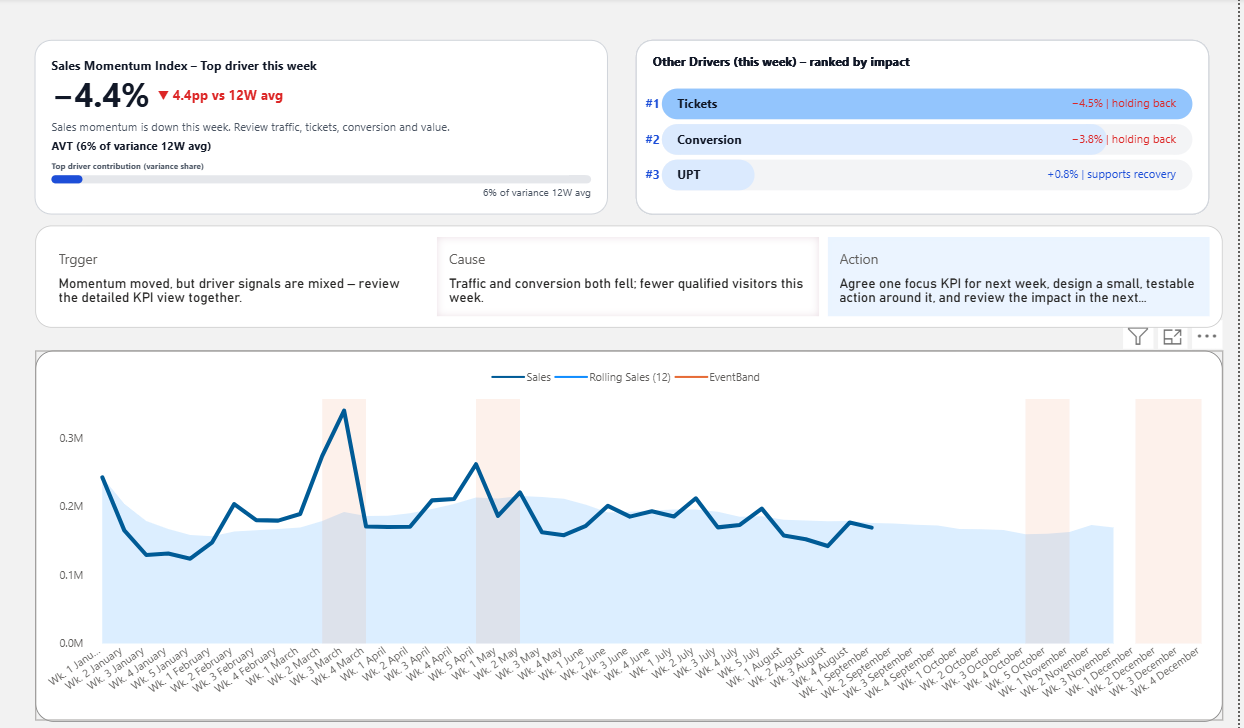
6. Dashboard-based systems
In modern business, dashboards often function as practical decision support systems when they help teams review condition, spot priority, and begin the right discussion faster.
Which type of decision support system matters most in business today?
In practice, businesses often use a combination of types. A dashboard may be data-driven, but also communication-driven if it shapes how teams review performance together. A forecasting tool may be model-driven, but still depends on data quality and interpretation.
Older classification view
- Helpful for academic understanding
- Categorizes DSS by technical structure
- Explains how systems differ
- Often taught in management systems context
Modern business view
- Focuses on how decisions are actually supported
- Looks at review quality, clarity, and timing
- Values systems that reduce uncertainty faster
- Often centers on dashboards, forecasting, and alerts
A modern practical category
Why dashboard-based decision support is so common now
Among the different types of decision support systems, dashboards have become one of the most widely used because they sit close to everyday business review.
Their strength depends on structure. A weak dashboard creates more interpretation work. A stronger dashboard helps teams understand condition and priority faster.