Decision Support Guide
Decision Support System Software: What It Is and What Businesses Actually Use
Decision support system software helps businesses make better decisions by organizing information, reducing uncertainty, and making important patterns easier to interpret. In practice, it can include dashboards, forecasting software, planning tools, alerts, and scenario models.
Decision support system software refers to software designed to help people make better decisions. It does this by combining data, models, reporting, and business logic in a way that supports analysis, comparison, and judgment.
The phrase may sound formal, but the idea is practical. Businesses use this kind of software every day when they forecast sales, review KPI performance, compare scenarios, or respond to alerts before problems become larger.
Common types of decision support system software
Not all decision support software looks the same. Different tools support different kinds of business decisions.
Dashboard software
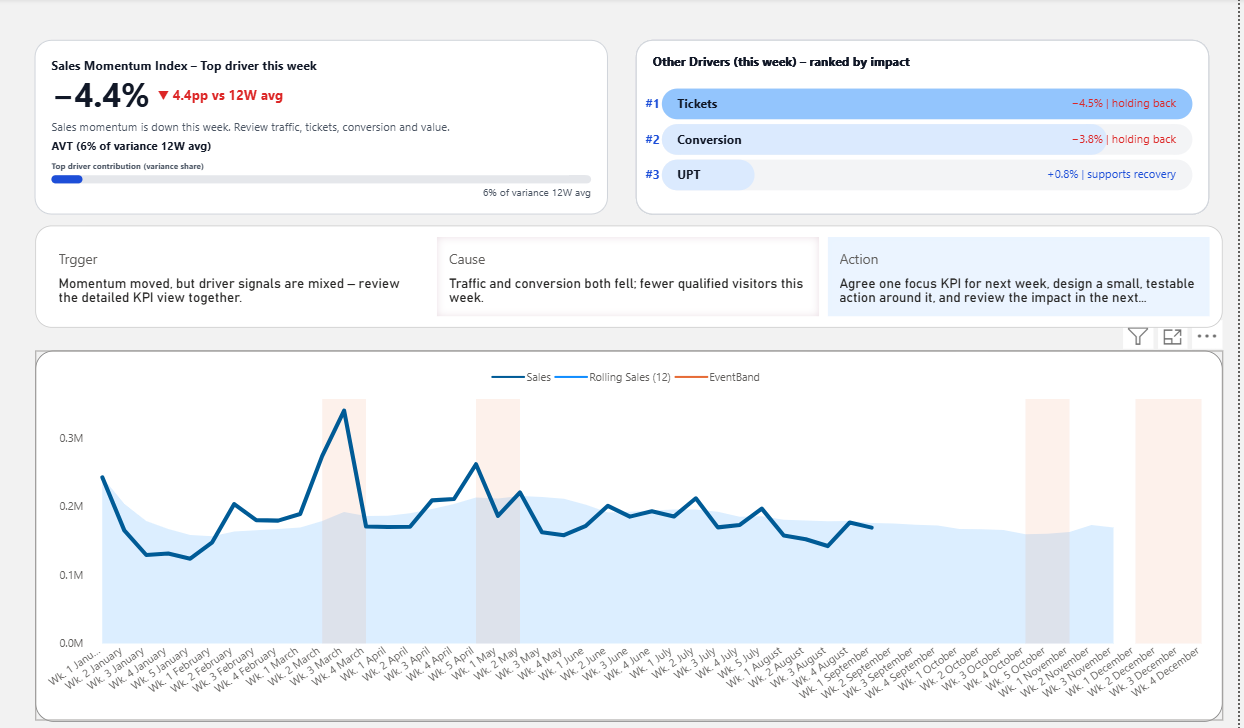
Dashboard tools help teams monitor performance, understand KPI condition, and review business results in a more structured way.
Forecasting software
Forecasting tools help decision-makers estimate future outcomes such as demand, revenue, or capacity needs before action is taken.
Planning software
Planning systems support decisions by helping teams allocate resources, compare priorities, and manage business trade-offs.
Scenario modeling software
These tools let users compare multiple possible decisions and see how each option may affect cost, revenue, or operational performance.
Alert and monitoring software
Alert-based systems support faster action by notifying teams when a KPI crosses an important threshold or when risk begins to build.
Recommendation software
Recommendation systems suggest possible actions using patterns, rules, or models, especially in areas like operations, commerce, and customer experience.
What businesses actually use as decision support software today
In modern business, decision support software is rarely one isolated system. More often, it appears as a combination of tools that work together across reporting, planning, analysis, and decision review.
Review tools
Dashboards and management reports help teams review performance and understand what changed.
Forward-looking tools
Forecasting and scenario tools help businesses think ahead rather than react only after results arrive.
Trigger tools
Alerts and threshold systems help teams respond earlier by making critical change visible sooner.
One of the most common forms
Why dashboards are often the most visible decision support software
In many organizations, dashboards are the decision support software that leaders see most often. That is why dashboard design matters so much.
A dashboard can simply organize data, or it can help teams understand what matters and where the next discussion should begin. That difference changes how useful the software becomes in real decision-making.